
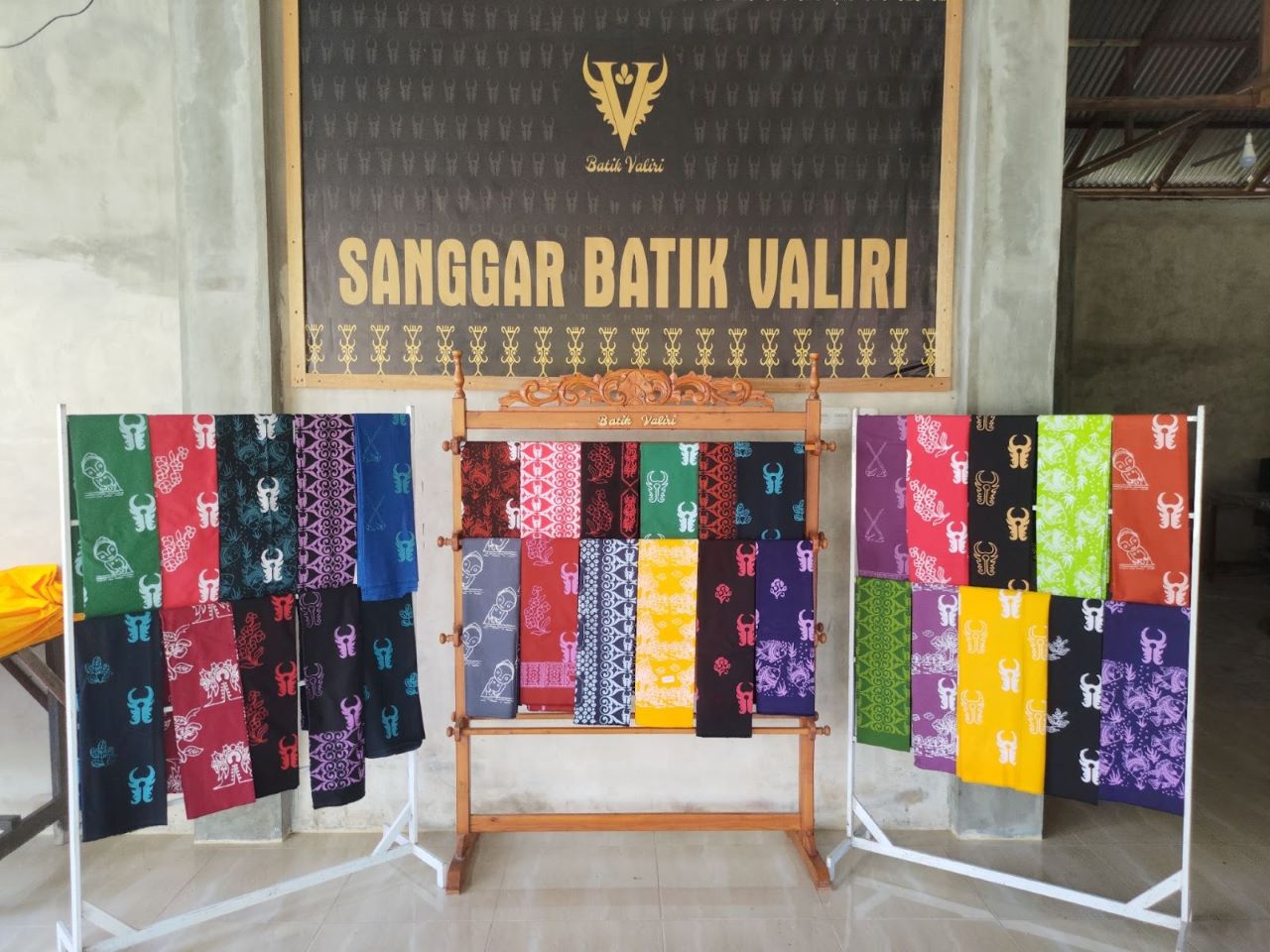
Sigi, Indonesia, March 18, 2026 — Beyond just a residential area, Sigi Regency in Central Sulawesi is a sanctuary of noble values and local wisdom. Flanked by mountains and ancient forests strictly guarded by customary law, Sigi preserves a cultural heritage, beautifully etched into its textile crafts. Batik Sigi is a visual narrative of the harmony between community and nature. Through motifs inspired by flora, fauna, cultural values, and local history, this batik connects a grand past with the contemporary spirit of sustainability.
As mass production saturates the global fashion industry, traditional fabrics like Batik Valiri have emerged as symbols of identity and consciousness. From runways to urban consumers’ wardrobes, tradition-based textiles are no longer confined to ceremonial attire. Instead, they represent a statement of values regarding origins, sustainability, and the human connection to nature. In Sigi, fashion is defined not just by what is worn, but by the story of its creation and the legacy it leaves behind.
This shift is mirrored by a surge in sustainable fashion, which has reached 89%, with 80% of global consumers now weighing sustainability impact before purchasing. In Southeast Asia, this trend is accelerated through traditional fabrics that utilize manual processes and natural materials, making them highly relevant in the modern industry.
In the Philippines, sustainable fashion is a primary driver of consumer choices, with surveys showing that 83% of Filipinos prefer eco-friendly products and 75% actively seek out eco-friendly brands. This demand revitalizes the country’s textile heritage, where artisans continue to produce traditional clothes using fabrics such as Abel Iloko from Northern Luzon and Piña fabric from Aklan colored with natural dyes from indigo, mahogany, and forest plants. This preserves centuries-old knowledge while aligning with modern sustainability values.
In Indonesia, this shift allows Batik to transcend its symbolic function and enter the global sustainable arena. Yet, beyond the major production centers, quiet stories of nature and tradition persist. One such story grows from an ancient forest protected by customary law in Sigi Regency, Central Sulawesi, where creativity and conservation are woven in every thread.
Nurturing Sigi’s Tradition and the Ranjuri Customary Forest Through Batik Valiri
In Beka Village, the 9-hectare Ranjuri Forest is more than just an ecological shield for the local community during floods or droughts; it is also the soul of batik Valiri, the only distinctive Sigi batik artisan currently operating. The name Valiri from the Kaili language means “it happens here,” honoring the ancestral bond between the community and the forest. Founder Afrianto launched his own brand in 2019, after years of working in the Palu City batik industry. This experience was further enriched by batik training organized by the Sigi Regency Government. From his journey, he realized that Sigi’s wealth had rarely been highlighted in batik.
“For a long time, batik has been synonymous with Javanese motifs. Yet in Sigi, we have a very strong wealth of nature, culture, and history. From the Ranjuri forest alone, which is only about 50 meters from our production site, I saw so many things that could be showcased, including natural dyes that can be developed from plants within that ancient forest,” said Anto.
Batik Valiri’s motifs transcend ornament, weaving regional philosophy into every pattern. The taiganja motif, for example, is a sacred pendant symbol used in traditional ceremonies that represents fertility, love, and a woman’s womb as the origin of life. It is often used as a marriage dowry and is part of symbolic traditional rituals. Through Batik Valiri, the meaning of taiganja is being revitalized so it can be understood and valued within a modern cultural context.
Beyond the taiganja, Batik Valiri also features the Rau Tree (Dracontomelon dao) from the Ranjuri Forest, moringa leaves, the traditional guma weapon, and the megalithic traces scattered throughout Sigi. All these motifs introduce Sigi’s natural, social, and historical wealth to a broader public.
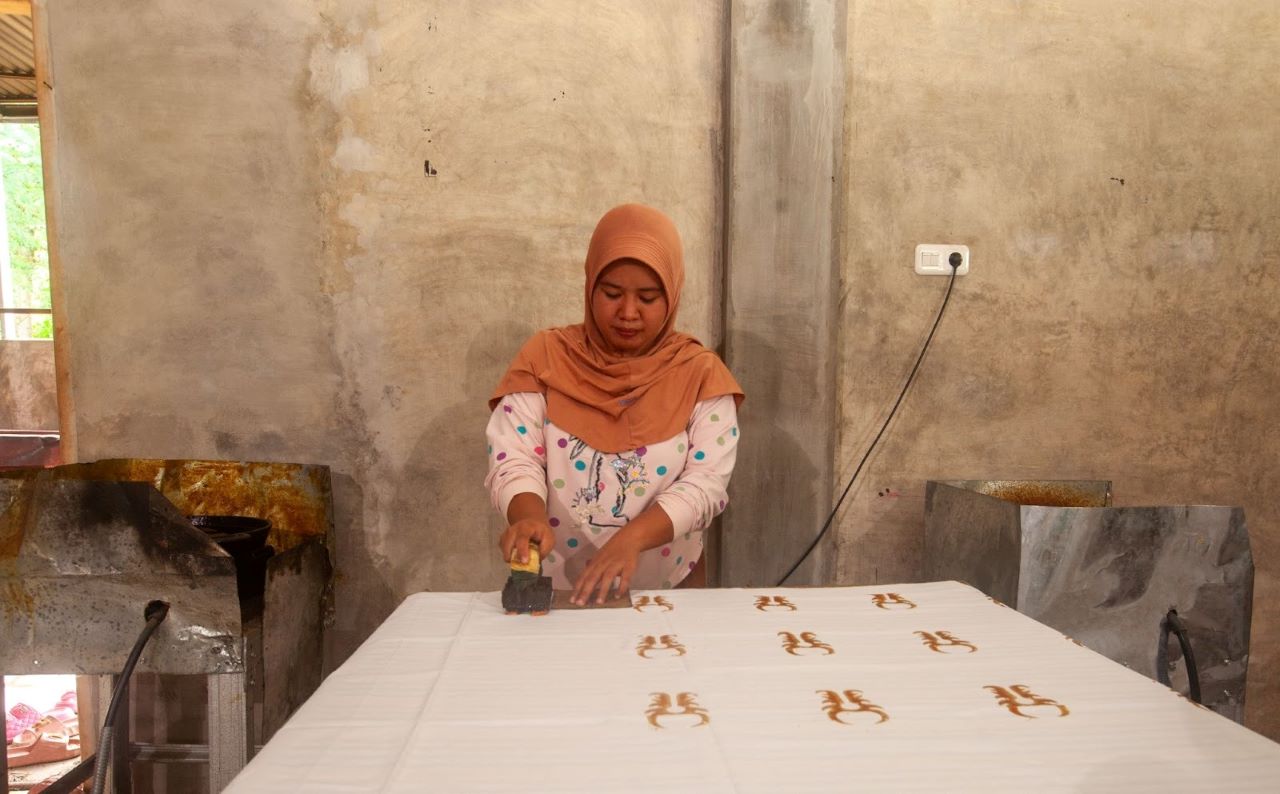
Batik Valiri blends traditional stamp and hand-drawn techniques with contemporary approaches such as abstract brushstrokes and the “ciprat” or splatter technique. The natural dyes used are harvested from the biodiversity of the Ranjuri forest, which has a massive impact on the lives of residents.
The signature colors of Batik Valiri are born from natural materials found nearby. Rau leaves produce a soft cream hue, mango leaves provide a fresh yellowish-green touch, while teak and ketapang leaves create elegant reddish-brown and black nuances. Through this palette, Batik Valiri tells a story of cooperation, respect for tradition, and an economic future firmly rooted in forest conservation.
The natural dyeing process is time-consuming. Ten kilograms of dried leaves is only enough to dye about five pieces of cloth, requiring a four-hour boiling process and repeated dipping up to twenty times to ensure the color penetrates completely.
“Synthetic dyes only need one dip for the color to appear. But natural dyes require patience. That is what makes the value different,” Anto explained.
Interestingly, the indigenous community of Beka Village only collects fallen leaves without cutting down trees. Activities within the Ranjuri area require customary permission, ensuring that, while the land is administratively designated a production forest, it is socially protected as a sacred sanctuary. The forest also serves as a vital natural buffer and remains the village’s sole source of clean water during droughts. For the people of Beka, the Ranjuri is their primary guardian and source of life.
Gampiri Interaksi Incubation and the Transition to Natural Dyes
Despite its cultural values, Batik Valiri’s path has been challenging. In its early days, Anto relied on synthetic dyes due to limited knowledge, market access, and technical support. A significant change occurred when Batik Valiri joined the Gampiri Interaksi incubation program.
Over eight months of intensive mentoring, the program overhauled the business, strengthening governance, standardizing production, and bridging the gap to capital and new markets. This assistance also aligned with the Environmental Agency’s efforts, which, in 2024, encouraged the use of natural dyes from the Ranjuri Forest.
“Batik Valiri was already strong socially and culturally, but its environmental aspect needed strengthening. Through workshops and collaboration, we encouraged the transition to natural dyes without damaging the ecosystem,” said Nedya Sinintha Maulaning, a representative of Gampiri Interaksi.
The natural dye workshops united Batik Valiri employees and villagers in mastering extraction and color-locking techniques using traditional fixatives such as betel lime and iron-based tunjung. As part of a sustainability commitment, mango, ketapang, and teak trees were replanted in the Ranjuri area, alongside a tree adoption program that covered approximately 50 trees in 2023.
Anto believes this mentoring opened a new perspective. “I now understand business processes, SOPs, public speaking, and gallery arrangement. Previously, production and sales were handled haphazardly, but now everything is more organized and sustainable,” he said.
While synthetic dyes remain in use for some market segments, Batik Valiri is steadily transitioning toward a natural-dye-only model as demand for eco-friendly, story-driven products climbs. Moving forward, Batik Valiri will process fabric into derivative products to be showcased at various local and national events.
Community Income Value and the Noble Hopes of Batik Valiri
Batik Valiri is now a source of livelihood for about ten people, mostly village youth and housewives. Since joining Gampiri Interaksi, the monthly turnover has surged from 10 million IDR to approximately 25 million IDR, with product prices ranging from 500,000 IDR to 1 million IDR depending on the motif and dyeing technique.
The market is not limited to local buyers. Supported by local government policies and a strategic Instagram presence, Batik Caliri serves both regional offices and a growing national audience. This growth solidifies its position as a cultural ambassador for the region. Through the Gampiri Interaksi and Kabupaten Lestari networks, Batik Valiri has become a premier official souvenir for international delegates and during provincial visits. To date, representatives from Brazil, the United States, and Japan have visited the workshops to study production and purchase authentic pieces.
Batik Valiri is also evolving into an experience-based ecotourism destination. Tourists can now explore the Ranjuri Forest, learn about the philosophy behind the motifs, and try their hand at batik. This concept has been piloted to unite natural, cultural, and economic potential into a single ecosystem.
“My hope is that Batik Valiri becomes better known, and that the youth of Sigi believe they can create and live decently from their own culture,” Anto said. He also hopes the workforce can expand so that training and workshop participants not only learn but are truly integrated into the business.
Batik Valiri embodies Sigi Regency’s transformation toward a sustainable and restorative economy By grounding economic practice in local values, community-based business strengthening, wise resource utilization, and local value creation, Batik Valiri helps boost community income while strengthening regional social and economic resilience. This initiative is aligned with the Sustainable District Association (LTKL), which demonstrates that development can rely on local strengths, protect nature, and foster sustainable prosperity. This reaffirms Sigi’s role in the collective movement of sustainable districts in Indonesia.
For Gampiri Interaksi and LTKL, Batik Valiri is a concrete example of a restorative economy in action. In Sigi, where forests cover a significant portion of the land, this model demonstrates that protecting ecosystems and revitalizing culture can actually be the foundation for economic recovery. It proves that when communities are empowered to guard their resources, the choice between the economy and the environment disappears.