
Industry insights indicate that ride-hailing platforms are gradually expanding beyond core passenger transport, with increased focus on predictive safety capabilities, AI-enabled customer support, embedded payment systems, and more structured regulatory engagement.

Manila, 10 March 2026 – 2026 may be the year that more ride-hailing apps will expand their operations to become mobility superapps, according to industry experts who have analyzed the movements of multiple apps across the board. The analysis suggests that this shift will be driven by multi-service bundling, predictive safety features, boosted AI integration, cashless payment options, and coordination with regulators.
“Our global market review found that the way forward for ride-hailing platforms is to evolve into mobility superapps,” Evgenia Matrosova, inDrive Chief Ride-Hailing Officer, said. “Users want convenience more than anything, where diverse mobility solutions, proactive safety functions, and seamless digital payments can all be found in one platform. Integrated services won’t just push innovation forward; they signify reliability and flexibility on the road and beyond.”
#1 Ride-hailing apps may begin venturing into adjacent services
More ride-hailing apps may begin expanding into adjacent mobility services this year due to an increase in global demand for integrated transport services. For instance, market intelligence firm Sensor Tower listed inDrive and other ride-hailing platforms among the most downloaded travel apps in 2025—revealing global demand for their expansion into adjacent travel services.
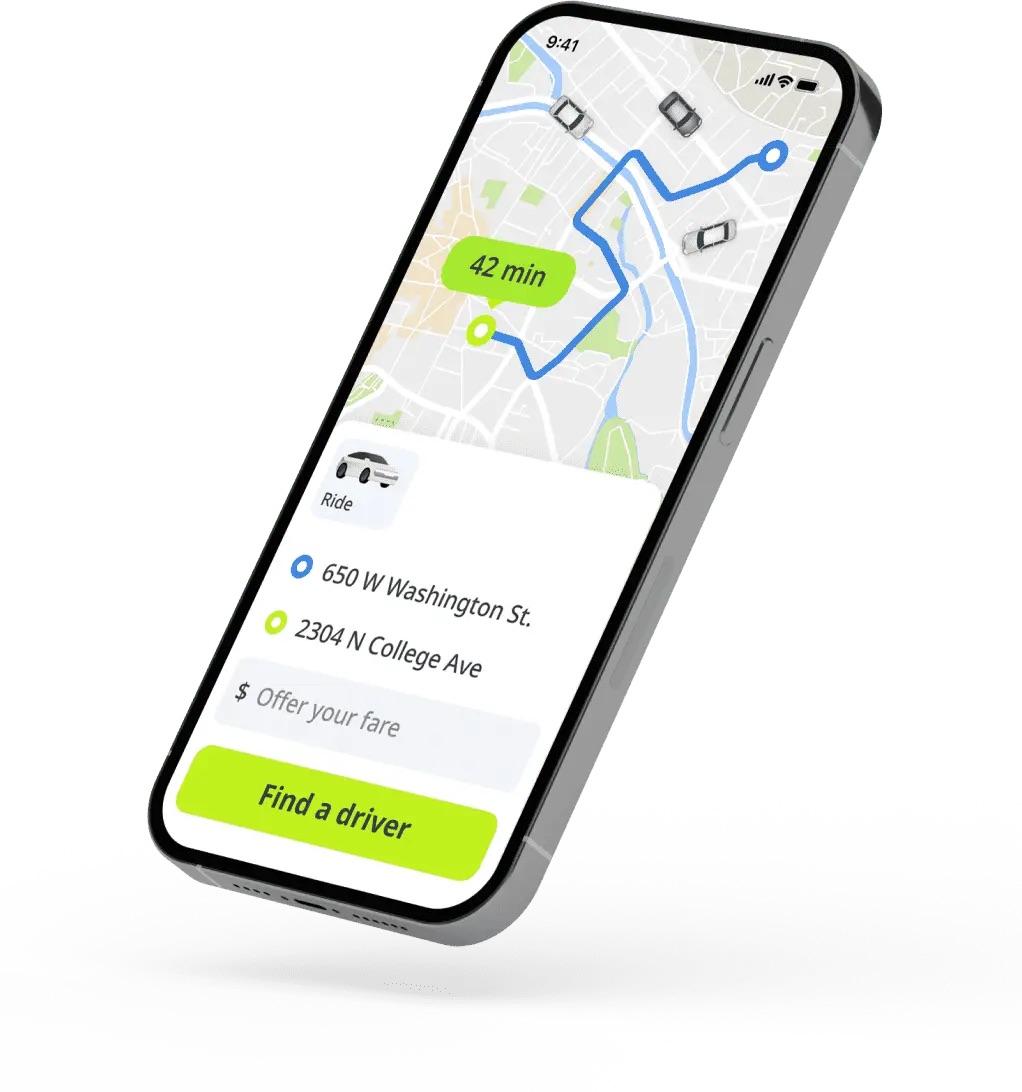
Zooming into the platforms’ service expansion, industry experts are optimistic about the potential in food delivery. Data shows that restaurants worldwide are considering working with delivery platforms that offer them more control over their profit margins.
A separate Ken Research study also revealed that online travel booking has also enjoyed similar local growth, with a projected revenue of Php 50 billion. This could boost pre-booked airport pickups’ popularity, with travelers viewing this as a much-needed convenience.
These all reveal one thing: the lines between passenger transport and adjacent mobility services are beginning to blur. Thus, ride-hailing apps may begin venturing into adjacent mobility services to create an all-in-one experience for users.
#2 Safety systems are slowly shifting from protection to prediction
At present, in-app safety features are often limited to real-time monitoring, emergency hotline buttons, and a speed dial to the platform’s 24/7 support. However, industry experts forecast that ride-hailing apps may begin using AI-powered analytics and risk modeling for predictive road safety measures.
For instance, the Forum of European National Highway Research Laboratories says that AI can collect traffic data, weather feeds, and other key information to predict collisions and recommend alternate routes. Predictive safety features like this can help ride-hailing apps move past interventionary measures and proactively protect their drivers and passengers.
#3 AI to enhance the in-app customer experience
Industry experts also say that mobility services may continue leveraging AI to improve customer experience. There are also early indicators that ride-hailing apps may experiment with using human-like AI voices in their customer support systems. AI may also be used in developing personal mobility agents that manage drivers’ schedules and earnings and intervene during emergencies.

With ride-hailing platforms considering venturing into food delivery, they may use AI to simulate customer interactions. Large language models can simulate dialogue-based ordering, allowing users to verbally dictate their orders or send them via chat platforms like WhatsApp. Not only would this speed up the delivery process, but it would also cater to users who prefer personal interactions.
#4 Ride-hailing apps eyeing seamless in-app payment systems
Cashless payment options, such as e-wallets and online bank transfers, are gaining popularity among Filipino consumers. A Bangko Sentral ng Pilipinas report found that 57.4% of Filipinos’ retail transactions were paid online. This creates an opportunity for ride-hailing companies to make their payment schemes more seamless. They may consider embedding cashless payment options in their apps, which can automatically deduct their transaction from their attached online banking and e-wallet accounts.
inDrive’s internal research shows that Filipino commuters are also price-sensitive, often allocating tight budgets to their transportation expenses. This consumer attitude could pave the way for ride-hailing companies to install in-app wallets. These facilitate better online budgeting and accommodate users who prefer cash.
#5 Ride-hailing apps expected to continue to uphold price fairness
Strict regulatory compliance has always influenced the dynamics of the ride-hailing industry. In particular, the Land Transportation Franchising and Regulatory Board has been staunch in implementing its fare matrix. Just last December, the regulator imposed surge caps to maintain affordable holiday fares—underscoring its commitment to keeping prices affordable for passengers.
With this in mind, industry dynamics suggest a growing emphasis on collaborative regulatory models. Experts advise ride-hailing companies to continue collaborating with government regulators to promote pricing fairness. They also recommended continuing to implement lower commission rates to increase drivers’ income and strengthen passenger loyalty. This year, platforms may also take it a step further by rolling out promotions, capped surge policies, and loyalty models.
These trends paint a picture of what could come next for the ride-hailing industry this year. With these in mind, inDrive will continue to uphold transparency, safety, and inclusivity for drivers and passengers alike. For more updates on inDrive’s initiatives this year, visit www.inDrive.com or follow @inDrive.ph on social media.