
As Filipinos observe Holy Week, a time for reflection, discernment, and generosity, it also coincides with April Fool’s Day, a reminder not to be easily misled. While often associated with lighthearted pranks, the idea of being “fooled” takes on a more serious meaning in today’s increasingly digital world.
Periods of heightened online activity, such as holidays, often create more opportunities for connection but also expose individuals to evolving financial risks. As more people send money, make donations, and manage their finances online, cybercriminals continue to exploit moments of urgency, goodwill, and distraction.
Today’s scams are no longer easy to spot. They are designed to mirror real messages, trusted institutions, and even personal relationships, blurring the line between legitimate and fraudulent transactions. From phishing messages and fraudulent payment links to impersonation schemes and fake donation drives, these tactics are becoming more sophisticated and emotionally persuasive.
“Scammers often rely on urgency and emotion to pressure people into acting quickly without verifying the call,” said Jonathan John B. Paz, Head of Enterprise Fraud Risk and Information Security Management at BPI. “Practicing good cyber hygiene and verifying offers before making transactions can help prevent financial loss and protect sensitive information.”
As April Fool’s Day reminds people not to be easily fooled, cybersecurity experts encourage the public to stay alert for these common scams:
- Fake text messages and emails. These messages may appear to come from trusted institutions asking you to click on a link followed by your card information, such as card number, card expiry, CVC/CVV, and One Time PIN (OTP). They may also ask for your personal account information and passwords.
- Fraudulent payment links. Some fly-by-night merchants may also send fake payment links designed to capture banking credentials and/or sensitive information.
- Impersonation scams. Scammers may pretend to be family members, friends, or bank representatives requesting either urgent financial assistance or to verify an unusual transaction/s.
- Fake donation drives. Fraudsters may copy legitimate charity posts or create convincing campaigns online to trick people into sending money to fraudulent accounts.
Moments of pause, such as Holy Week, offer an opportunity not only for spiritual reflection, but also for more mindful decision making in daily life, including how we engage online. Building safer digital habits is no longer just a technical concern, but a shared responsibility.
As you take time to reflect this coming Lenten season, may this also be a time to stay mindful and vigilant.
Here are 5 simple steps to help you avoid SCAMS:
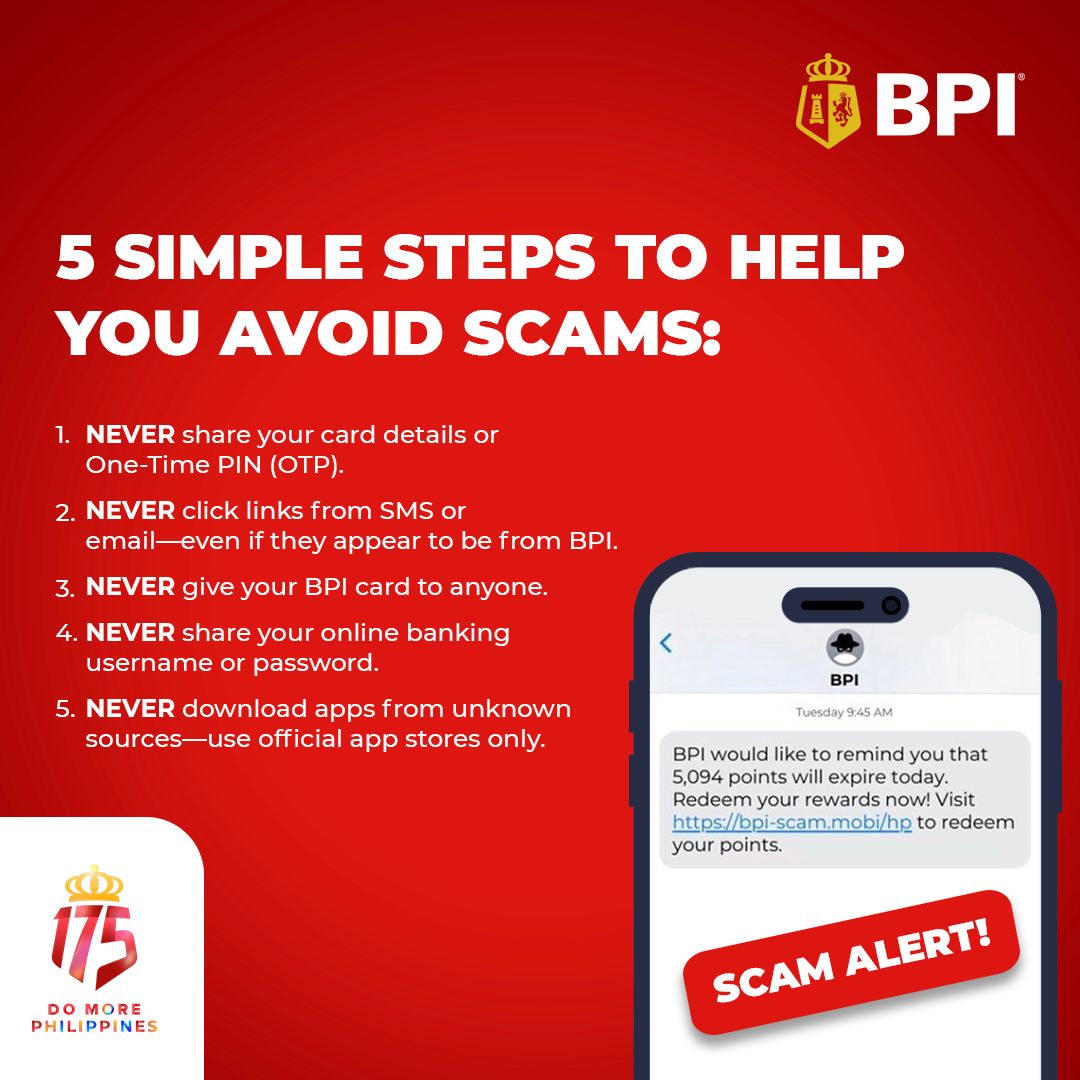
- NEVER share your card details or One-Time PIN (OTP) to anyone.
- NEVER click on links, whether via SMS or Email, even if the sender is BPI.
- NEVER surrender or give your BPI card to anyone.
- NEVER provide your online banking username or password to anyone.
- NEVER download mobile applications from unknown senders. Visit the official website, Google Play or Apple Store when downloading an application.
“Cybersecurity starts with simple everyday habits,” Paz added. “Taking time to update contact information, review security settings, and stay alert online can go a long way in protecting your accounts.”
By fostering a culture of vigilance and shared responsibility, Filipinos can navigate an increasingly digital financial landscape with greater confidence and peace of mind.