
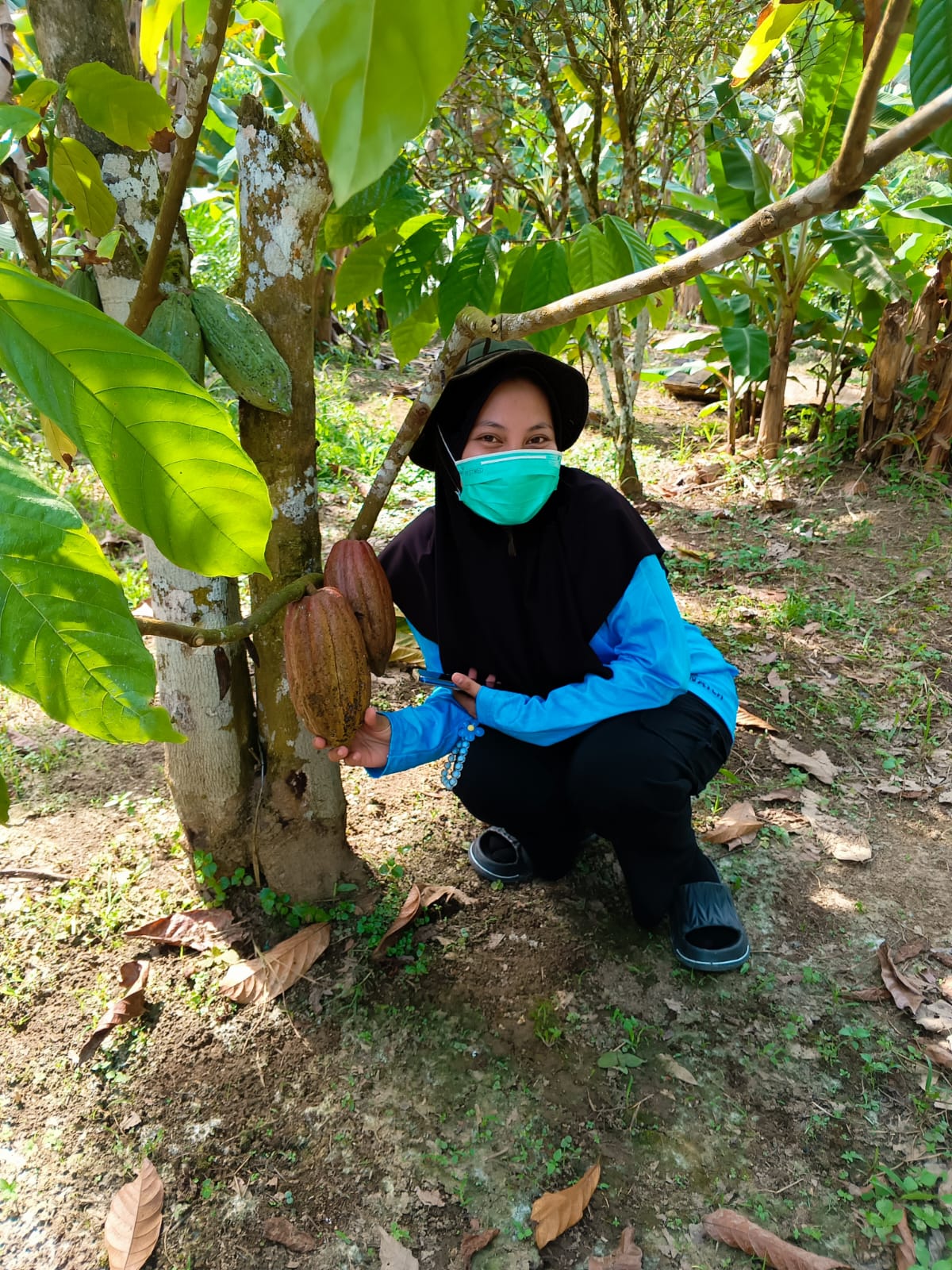
In Pejalin Village, Indonesia, women are turning cacao into premium chocolate while protecting nature.
Bulungan, Indonesia, July 6, 2026 – Chocolate fever is sweeping the globe. From the rise of premium chocolate trends in Europe to the viral “Dubai chocolate” phenomenon on social media, cacao has once again ascended as a high-value commodity. Yet cacao is far from a new crop in the Philippines. Introduced during the Spanish colonial period, it has long been woven into Filipino culture through traditional products such as tablea and tsokolate de batirol. Today, chocolate is no longer just a confectionery staple, it is a premium product that reflects origin, craftsmanship, and sustainability.
The Philippines is well-positioned to capitalize on the growing global demand for cacao, with the country’s chocolate confectionery market projected to reach USD 707.52 million by 2030. To ensure this growth translates into long-term value for farmers and the industry, the Department of Agriculture and industry stakeholders have launched the Philippine Cacao Industry Roadmap 2026–2030, which aims to build a more productive, profitable, resilient, and globally competitive cacao sector. The roadmap comes as the Philippines continues to gain international recognition, including being named among the world’s Top 50 Cacao of Excellence producers, reflecting the country’s potential to compete in the premium cacao market.
As the Philippines continues to build a more sustainable and competitive cacao sector, it can also draw lessons from neighboring countries on future-proofing the industry. In Indonesia, local communities are at the heart of the cacao value chain. Pejalin Village in Tanjung Palas District, Bulungan Regency, North Kalimantan, demonstrates this through its women-led cacao enterprise, where village women are not only business actors but also guardians of water springs and champions of a restorative economy.
The Anxiety of Pejalin Women and the Threat of Land Conversion
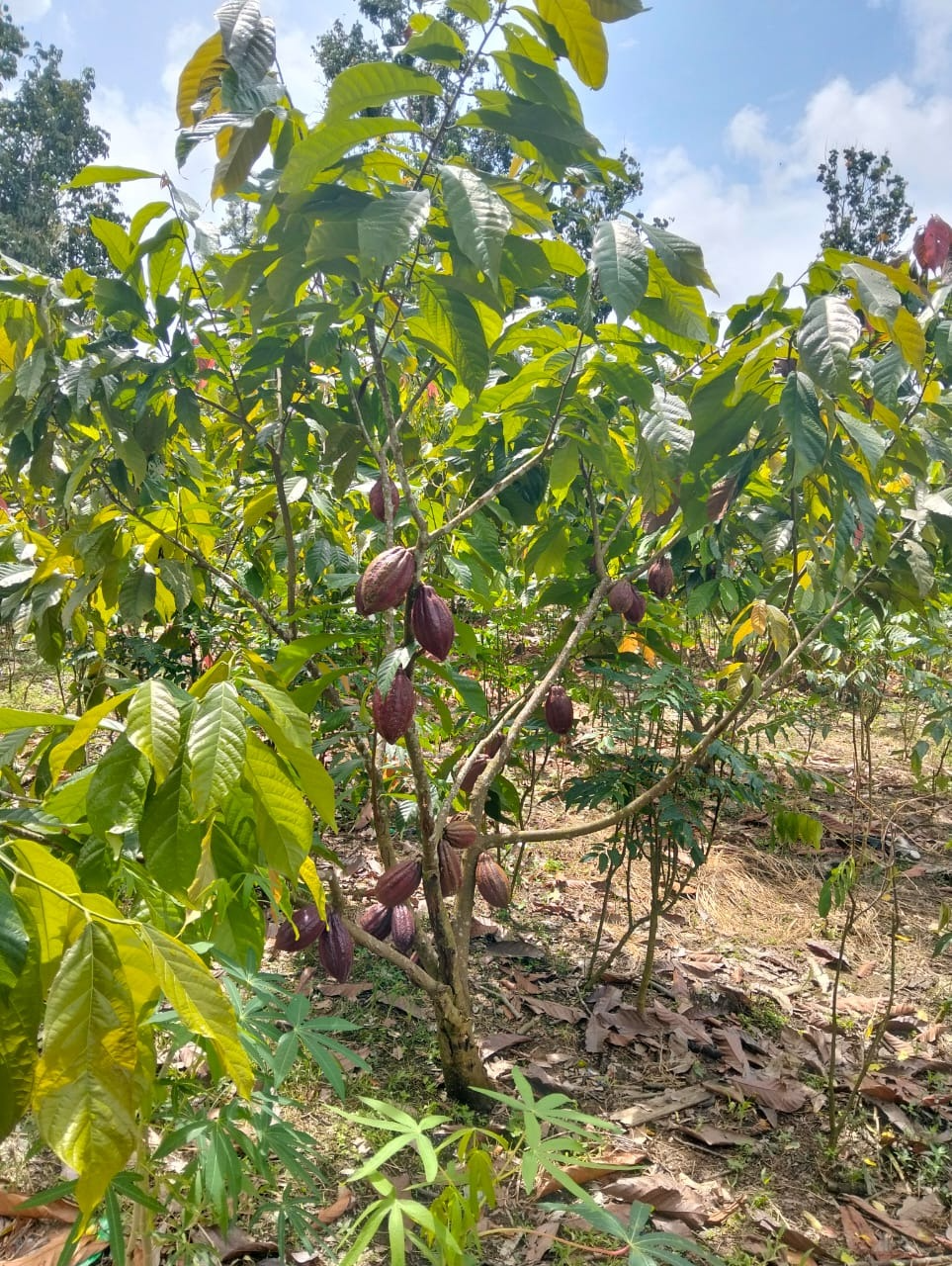
In Indonesia, that vision of a sustainable cacao economy is taking shape in Pejalin Village, where women are proving that cacao can protect both livelihoods. Yet in Pejalin Village that stands at a crossroads. Oil palm continues to expand, covering around 5,000 hectares, vastly outnumbering cacao at around 1,000 hectares. Yet for the community, cacao is more than an economic crop, it also helps safeguard vital water springs, making it both an environmental and economic asset.
This belief inspired the formation of the Kita Merong Joint Business Group (KUBE). A nine-member women’s group led by 38-year old leader Mardiatin (known as Ibu Yen), the group shifted into cacao in late 2023 after Pejalin Village received support from the Ecological-Based District Budget Transfer (TAKE) for green economic development.
“At that time, cacao existed in the village, but it was mostly taken by outsiders at low prices. Farmers were losing their spirit. We thought, if we could process it right here in the village, the value would be entirely different,” said Mardiatin.
With the support of the village government, KUBE began operating cacao processing equipment in March 2024, transforming raw beans into higher-value chocolate products. For Mardiatin, adding value to cacao is also a way to resist oil palm expansion.
“If cacao has value and farmers can live off it, they won’t easily abandon their gardens. This is also about protecting our water and soil,” she said
Production Processes, Quality Standards, and the Local Value Chain
Through KUBE Kita Merong, locally grown cacao beans are transformed into value-added products under the Kayan Koa brand. Five of the group’s nine members run the production house, processing around 10 kilograms of dry cacao beans daily, or 300 kilograms each month.
From bean selection and roasting to winnowing, grinding, and cocoa butter extraction, the group oversees the entire production process. They produce dark and milk chocolate bars, cocoa powder, and 3-in-1 ready-to-brew products, making Kayan Koa one of the few MSMEs in Bulungan to manage the cacao value chain from upstream to downstream.
“What differentiates us is that we process all the cacao ourselves until it is finished, not just the chocolate bars. The powder and the butter are also from here in Bulungan, so the taste is consistently authentic,” said Mardiatin.
Despite the success, the journey has not been without challenges. For many farmers, fermentation is seen as time-consuming, delaying much-needed daily income. Consequently, cacao beans are often sold unfermented, which affects the flavor profile and consistency of the final product.
“We do not dare take unfermented cacao because it greatly affects the taste and quality. Therefore, we must also provide education and insights to farmers so that the processing is correct,” said Mardiatin.
To address this, KUBE Kita Merong has partnered with the National Research and Innovation Agency (BRIN) on fermentation training and field trials, while students from Universitas Kaltara (UNIKALTARA) in North Kalimantan are developing innovations such as white chocolate and cacao husk tea. Mardiatin believes these efforts will strengthen business resilience by diversifying the village’s cacao products.
Restorative Economic Impact, Employment, and the Hope for Cacao Preservation
Kayan Koa has brought tangible benefits to both cacao cultivation and community income. All beans are purchased from Pejalin farmers at stable prices ranging from 80,000 IDR to 90,000 IDR per kilogram (around 274 PHP to 308 PHP). For the group, monthly turnover has increased significantly, from around 3 to 5 million IDR (around 10,269 PHP to 7,114 PHP) at the start of production to approximately 16 million IDR per month (around 54,765 PHP).
The venture has also created jobs for local women and youth, who support production during peak demand. Today, Kayan Koa products are sold in souvenir shops and local minimarkets and regularly showcased at national exhibitions with support from the regional government and Bank Indonesia.
“Women in the village now have a role, an income, and are involved in development. My hope is that our production house can soon be fully established and that we can deepen our processing training so the quality remains consistent,” Mardiatin said.
PINUS has affirmed its commitment to elevating these stories to the national stage. Through civil society networks and digital platforms, the story of KUBE Kita Merong is published on eftindonesia.org and presented at forums like the 6th National Conference on Ecological Funding, where PINUS advocates for the success of local community initiatives.
The Kayan Koa initiative shows that a restorative economy is more than just a concept; it is a reality rooted in the village. Through cacao processing led by a community of women, economic value is not just increased. It is cycled back to local farmers, preserving water sources, and opening up opportunities for women and the younger generation.