
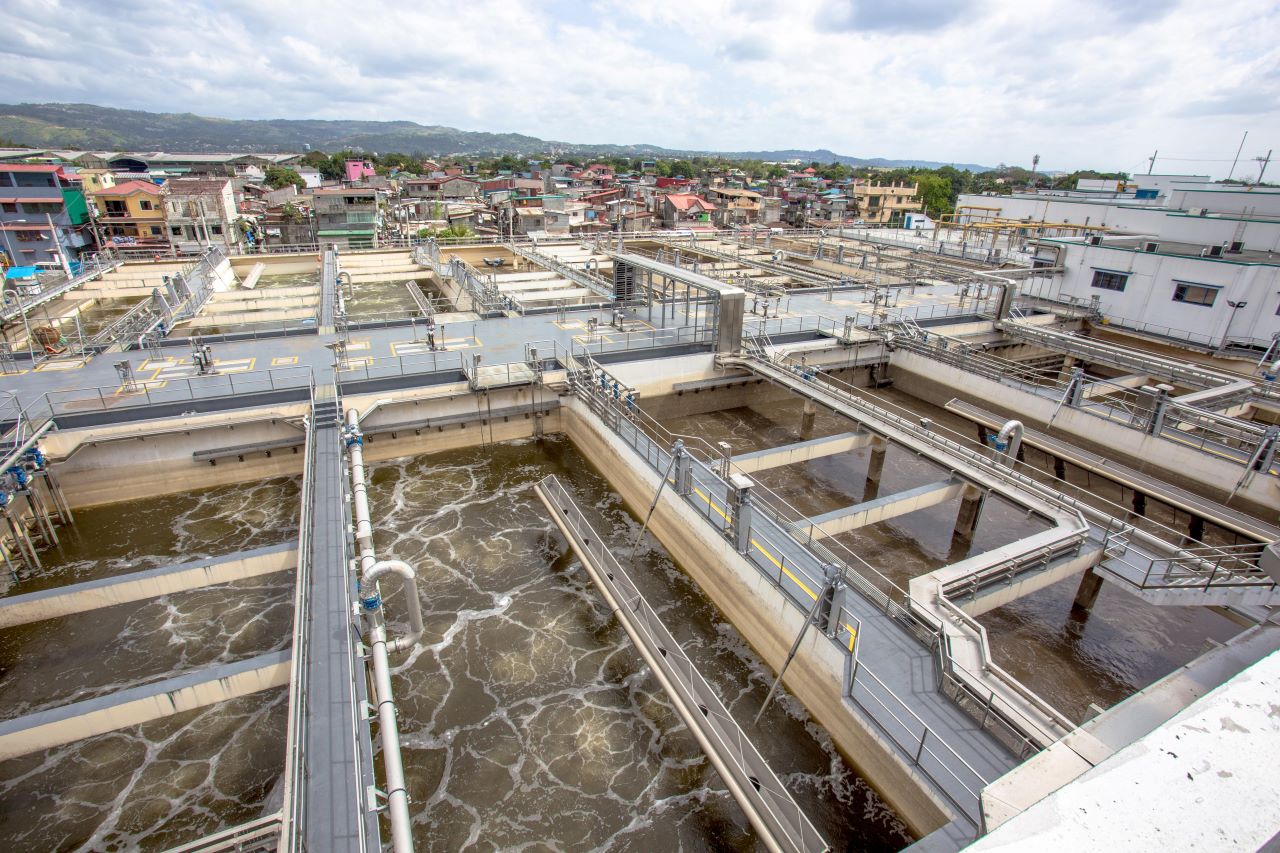
In photo: The Marikina North Sewage Treatment Plant with a capacity to treat 100 million liters of wastewater per day before releasing to the river.
Manila Water is accelerating the Batasan–Balara Flow Diversion Project to help improve water quality in waterways, promote community cleanliness, and support better public health outcomes in Quezon City and Marikina.
The project enables the diversion of wastewater from the Batasan–Balara area to the Marikina North Sewage Treatment Plant, ensuring that collected wastewater is properly treated instead of flowing into nearby creeks and rivers. This contributes to reducing pollution load in urban waterways and creating a cleaner environment for surrounding communities.
The project is composed of two main components: the construction of Vista Real Creek (VRC) and Nangka lift stations, and the force main pipelaying works. Together, these facilities will strengthen the sewer network and expand access to sanitation services in densely populated areas.
The system being developed includes a channel interceptor and lift station at Vista Real Creek with a complementing pipeline network that traverses the floodwall jogging lane, crosses the Marikina River, and eventually conveys wastewater to the Marikina North Sewage Treatment Plant. An additional pipeline in Nangka is also connected to the facility. The project expands sewer coverage and benefits more than 5,700 households across the two cities.
As of April 2026, force main pipelaying works are approximately 90 percent complete, while construction of the VRC lift station and its corresponding pipeline has already been completed and operational since 2025.
The initiative also supports compliance with the Philippine Clean Water Act and contributes to the implementation of the Supreme Court Mandamus for the Rehabilitation of Manila Bay. It forms part of Manila Water’s broader efforts to protect waterways and enhance environmental sustainability across its service areas.
“These wastewater system improvements support the shared goal of rehabilitating Manila Bay, while reflecting Manila Water’s responsibility to protect the environment and provide quality sanitation services to the communities we serve,” said Dittie Galang, Corporate Communications Affairs Group Head of Manila Water.
The Marikina North Sewage Treatment Plant, where the wastewater will be treated, is one of
Manila Water’s key facilities. Completed in 2016, it has a capacity of up to 100 million liters per day and currently serves portions of Marikina, Quezon City, and San Mateo, Rizal.
Through projects such as the Batasan–Balara Flow Diversion Project, Manila Water continues to strengthen wastewater management systems that support cleaner waterways, improved sanitation, and healthier communities.